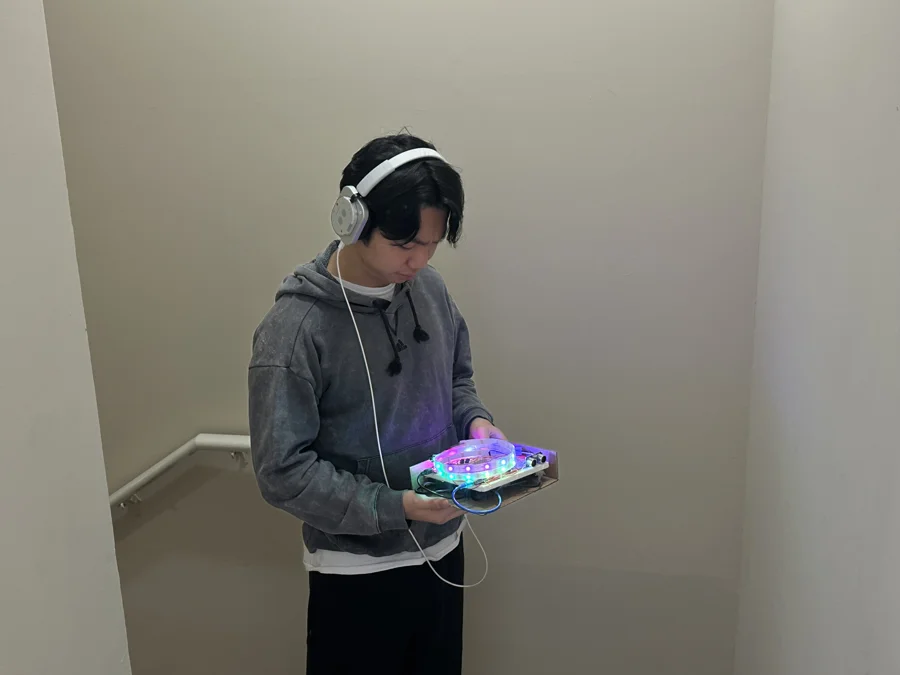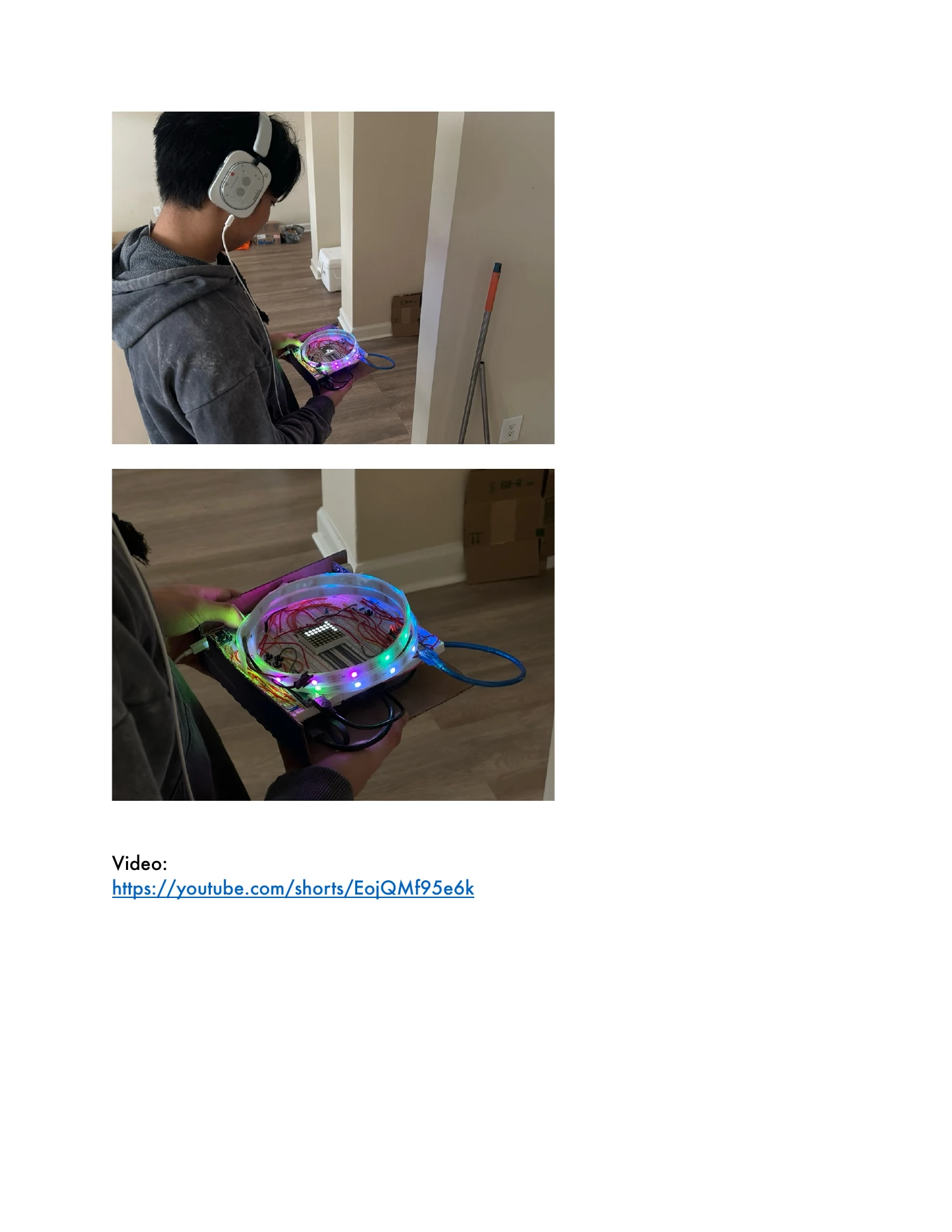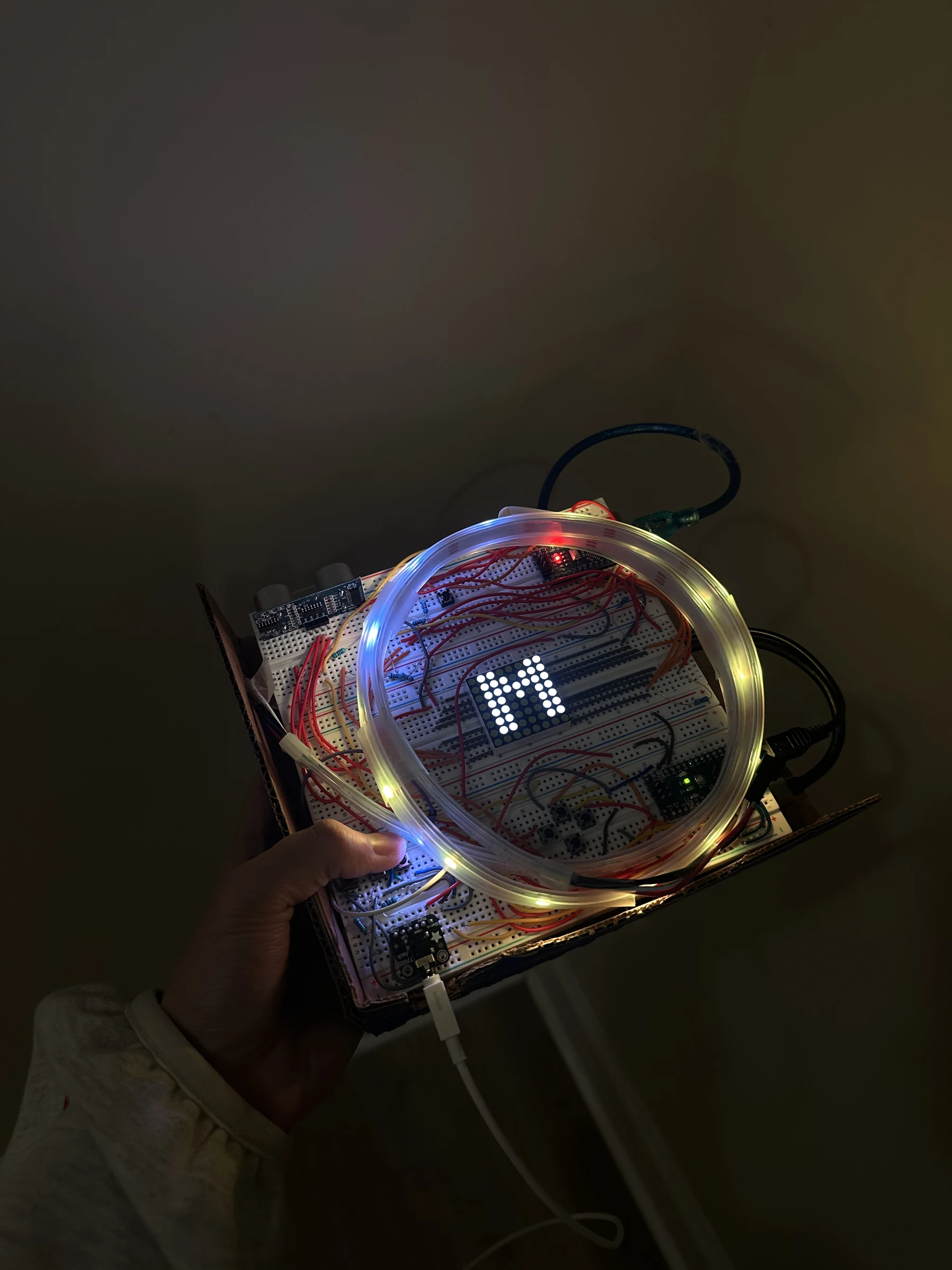
Holding the handmade music station in a familiar room, its loop of light glowing around exposed circuits.
World Sensing Music Station / working prototype
Move: drag or arrow keys
Music waveformMove to hear
World Sensing Music Station — reconstructed prototype A raised cardboard base, three visible breadboards, internal red and black jumper wires, two control boards, seven buttons, an ultrasonic sensor and a central LED matrix, surrounded by a translucent coiled NeoPixel strip. Power leads are tucked underneath.
Handmade instrument / digital reconstruction

A loop station + a musical instrument

WORLD SENSING
MUSIC STATION

Every place has
its own theme song.

Move through familiar space.
Walk the same route. Hear a familiar melody.

Find the song of this room

Final Project · Physical Computing, Emory University
Course taught by Dr. Kristin Williams

Moving through familiar space

ONE ROUTE.
A FAMILIAR MELODY.

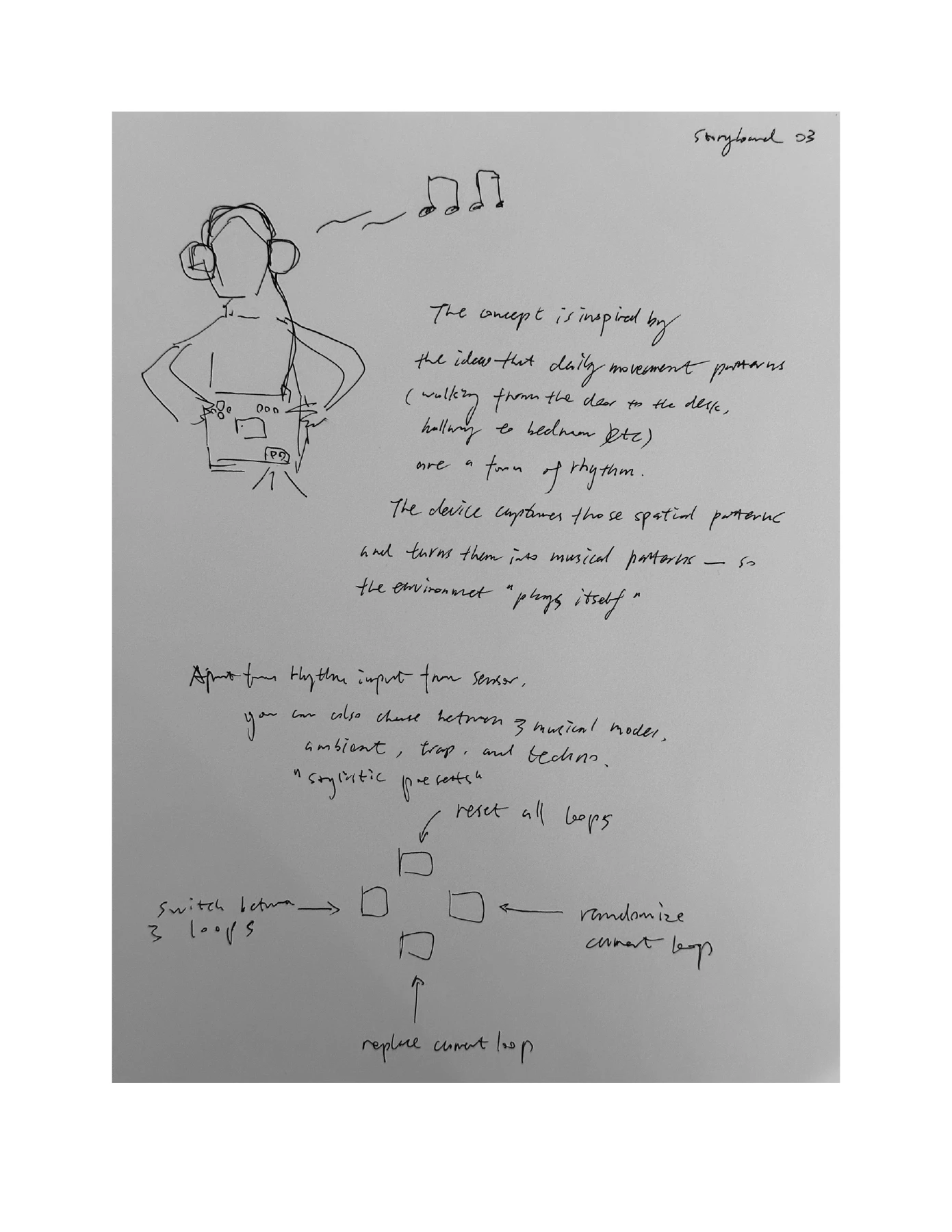
A route becomes a rhythm you can return to. Each place holds its notes; retracing your steps brings back the room’s theme song.

Try the route, then walk it again. The melody returns.

Sound character80 BPM
Choose a layer to record8 steps / loop

Choose a layer, press Record, then move for eight beats.

Drag the instrument or use the slider. Notes land on the beat. Record another layer to build the loop.

Inside the instrument

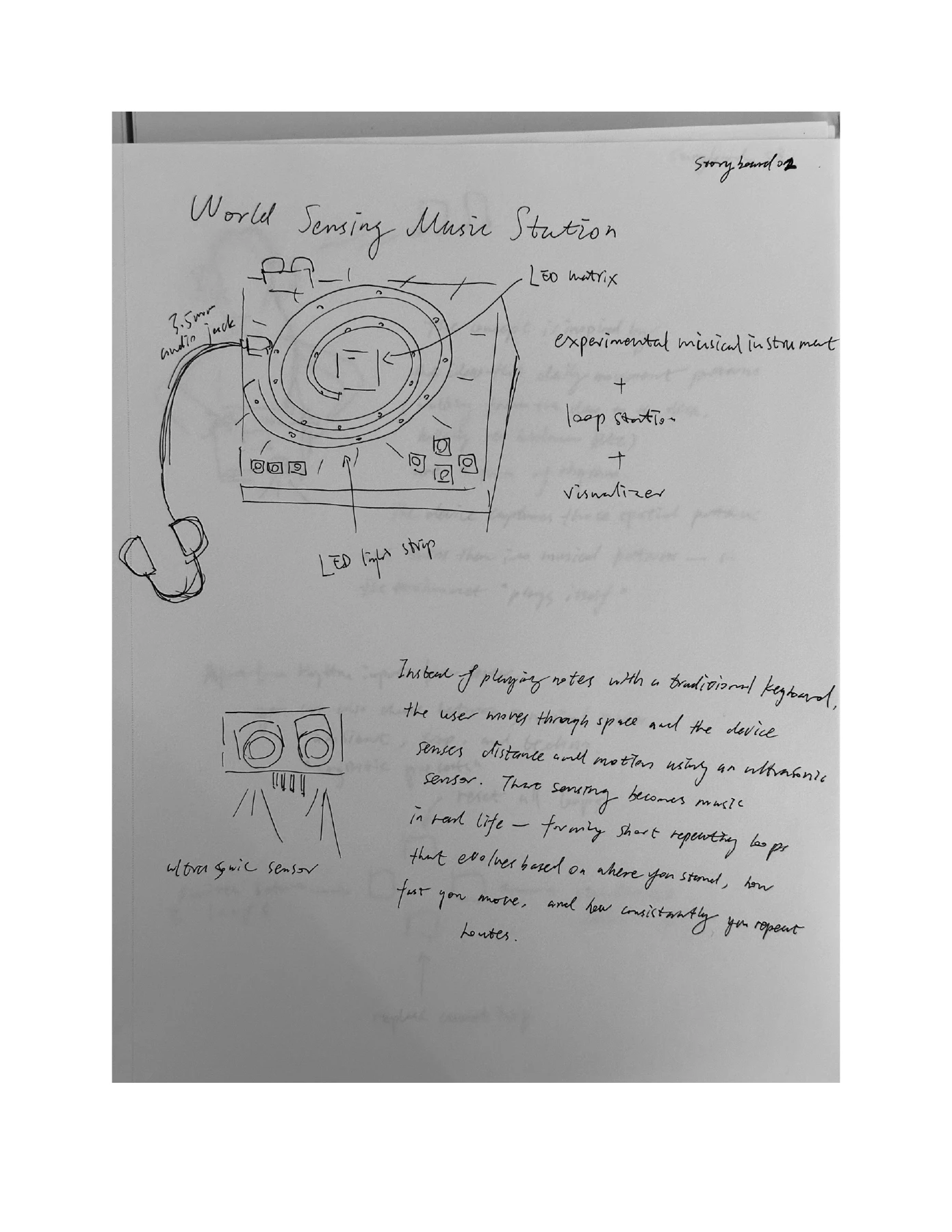
The physical prototype senses ultrasonic distance and movement, recording rhythm, bass and melody into eight-step loops. Its 30 LEDs show the loop; a second board scrolls messages on the 8×8 matrix.

This web interpretation gives locations stable notes, softens the sound and places movement on the beat. It makes the project’s idea audible: familiar spaces can hold familiar music. The original firmware is available below.

  • Ultrasonic sensor
  • LED matrix
  • NeoPixel loop
  • Seven buttons
  • Audio output
  • Control board
  • Display board

THE REAL
PROTOTYPE.

Exposed wires. A loop of light.
An instrument carried through ordinary space.
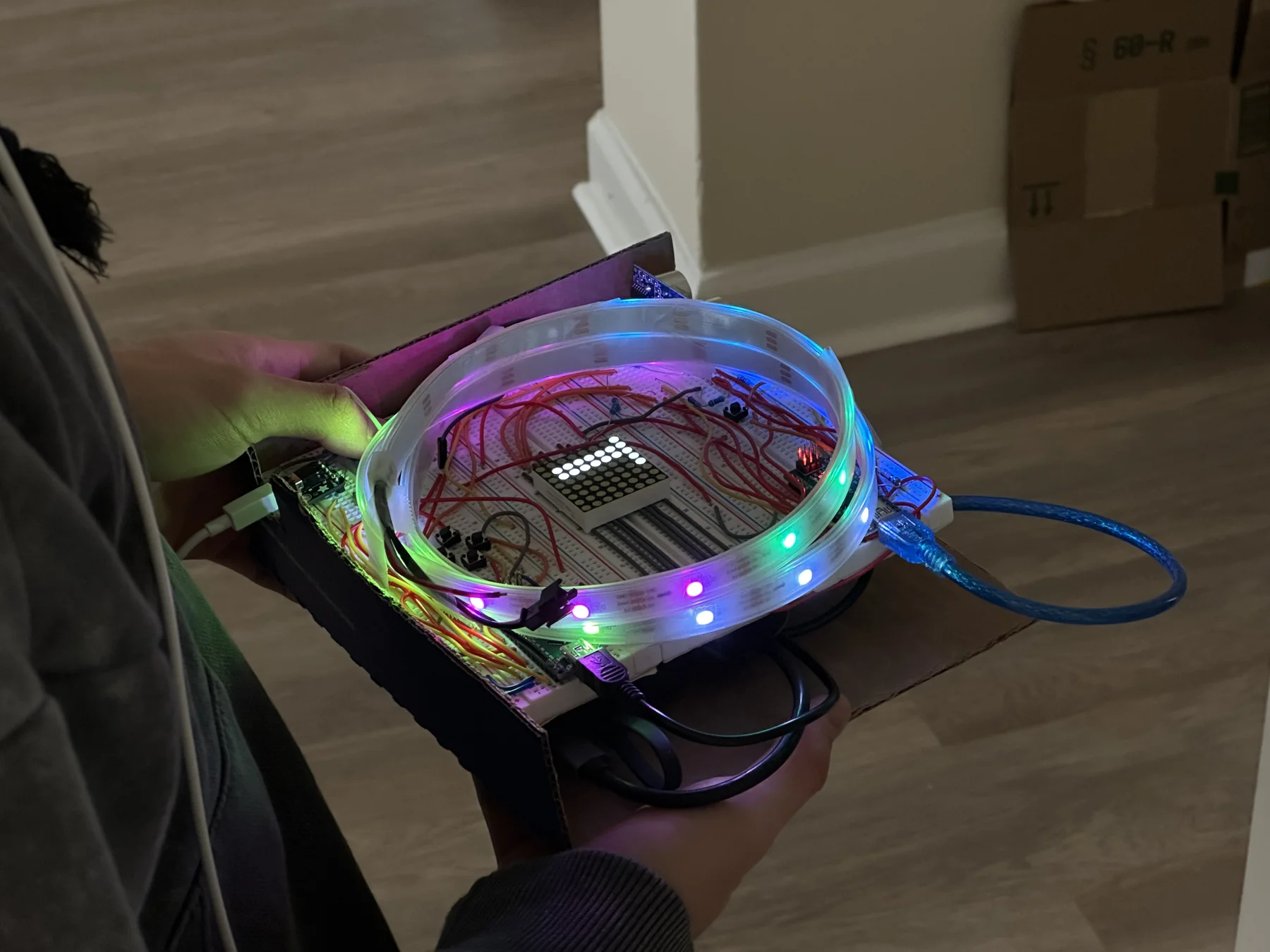
The real handmade station: a glowing translucent loop around breadboards, exposed wires and the LED matrix.
Demonstration / YouTube
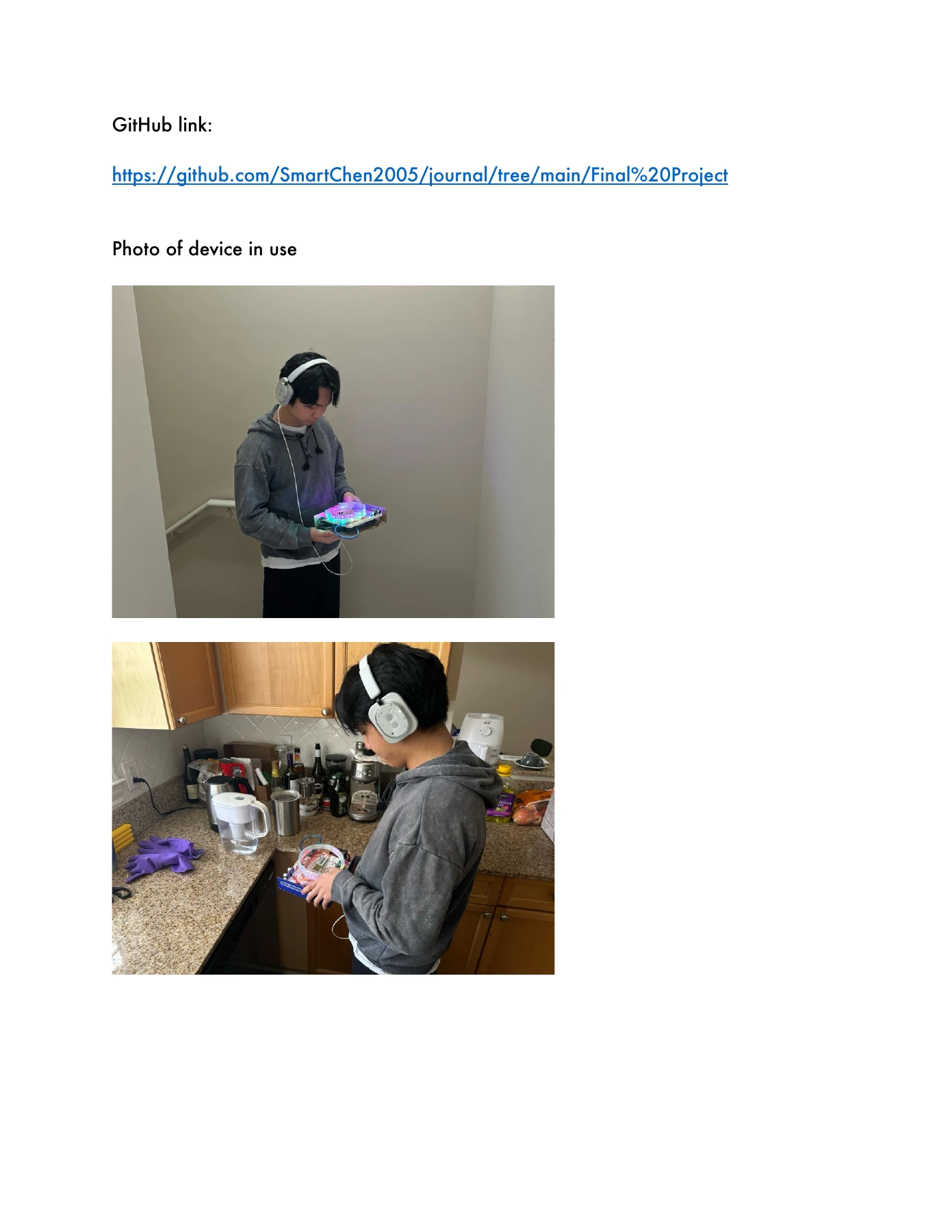
A person in headphones holds the glowing handheld station in a stairwell.
Movement through familiar space

The complete process / 13 pages

FROM SKETCH
TO INSTRUMENT.

Swipe through every page. Select a page to read it.
Complete original PDF page 1: Project overview.
Project overviewPDF 1 / 13
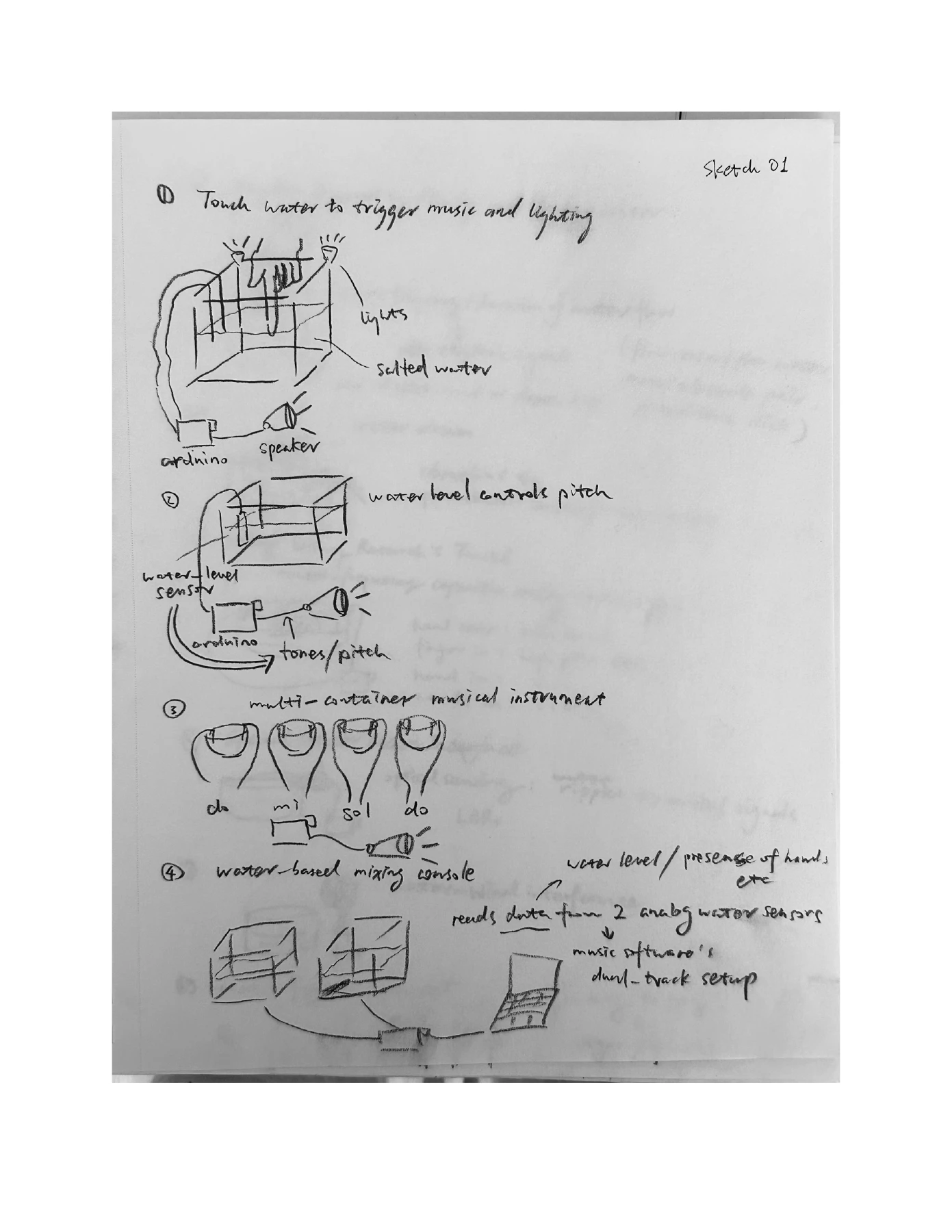
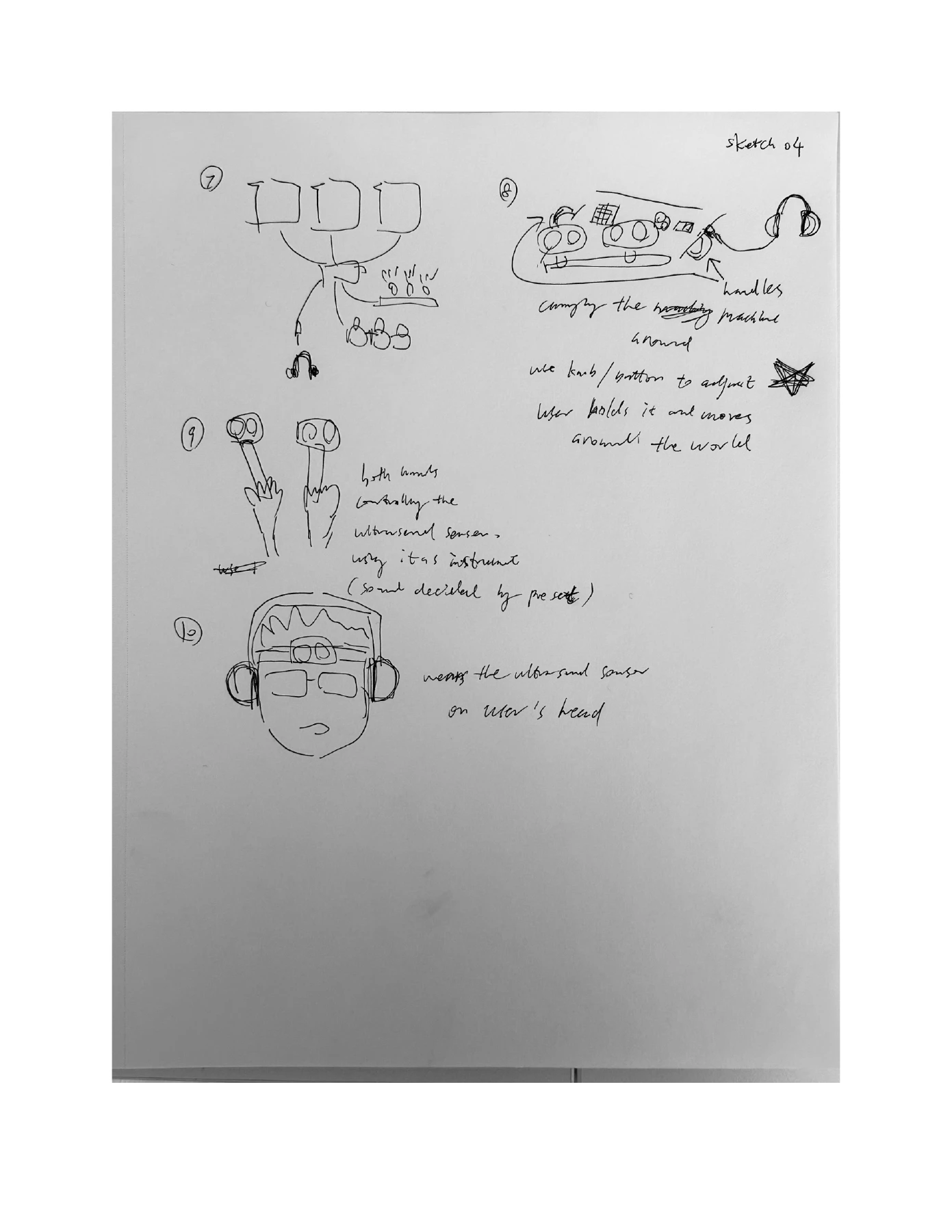
Complete original PDF page 2: Scribble sketches I.
Scribble sketches IPDF 2 / 13
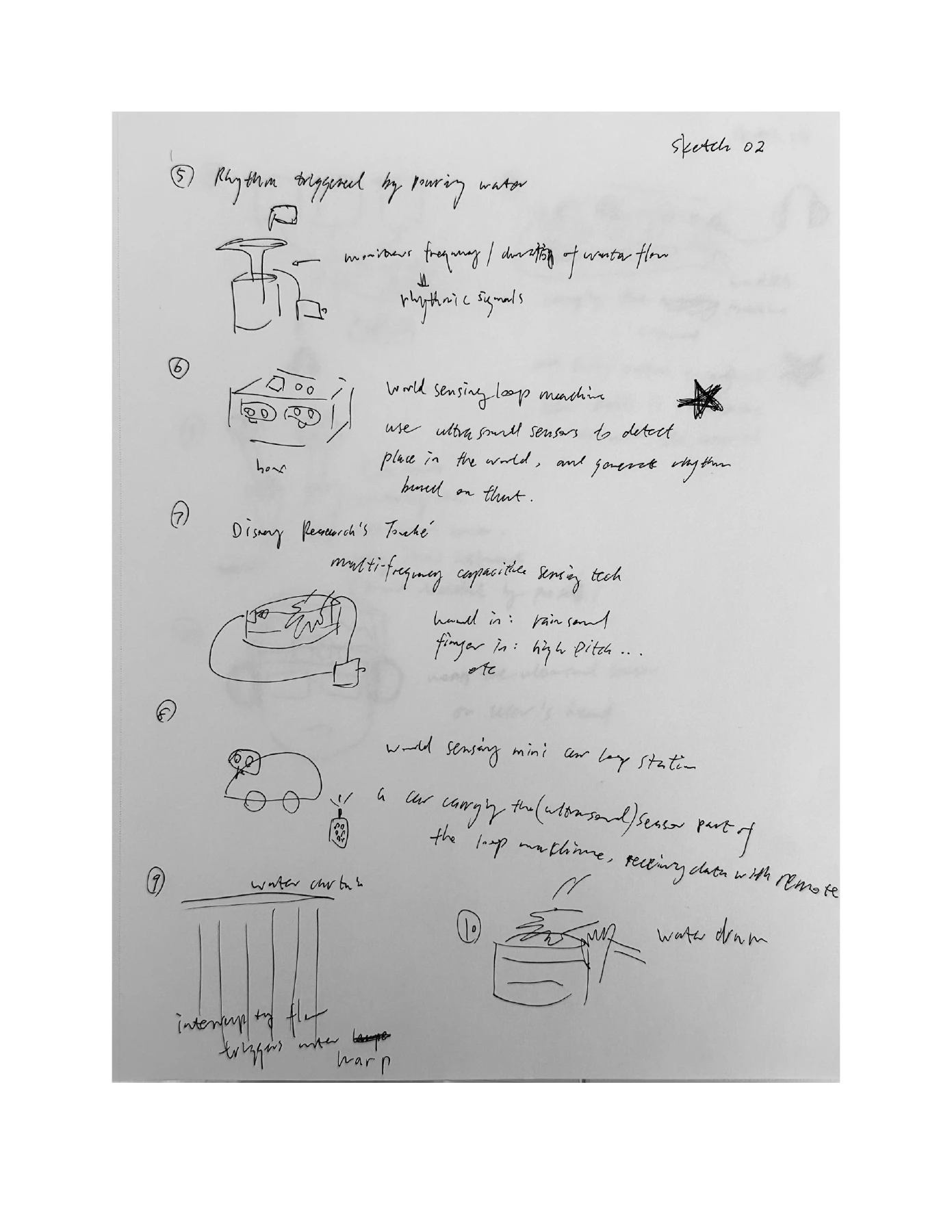
Complete original PDF page 3: Scribble sketches II.
Scribble sketches IIPDF 3 / 13
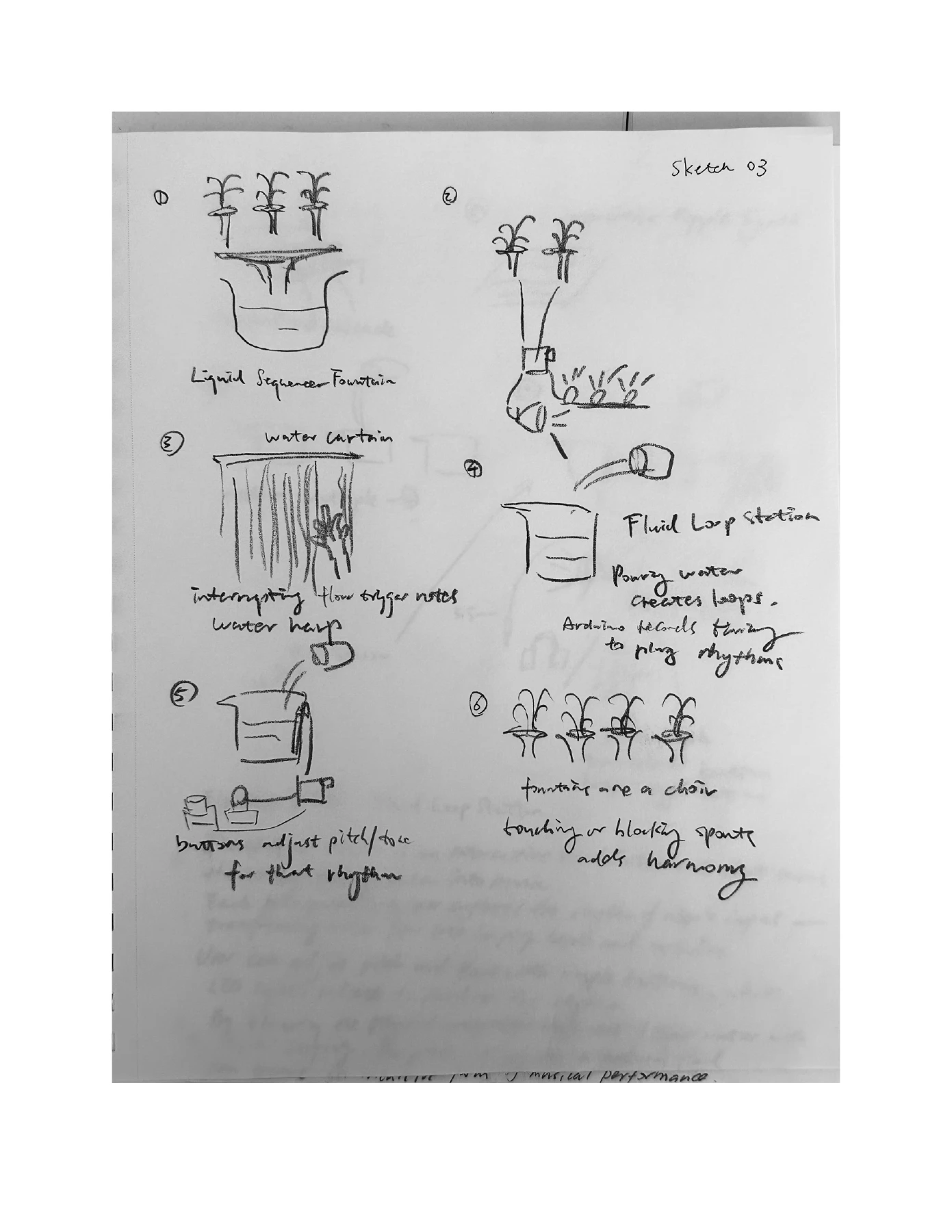
Complete original PDF page 4: Fluid experiments.
Fluid experimentsPDF 4 / 13
Complete original PDF page 5: Early concepts.
Early conceptsPDF 5 / 13
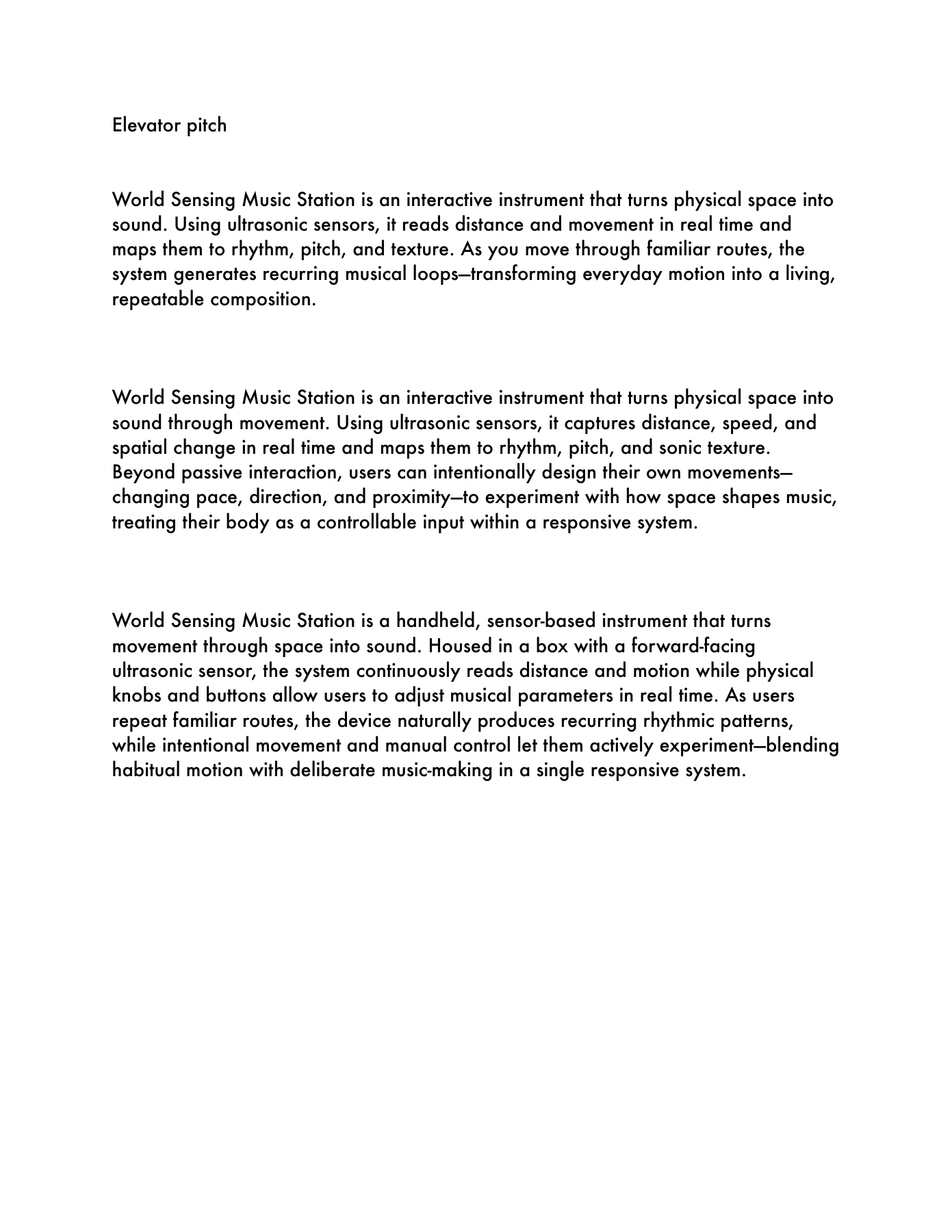
Complete original PDF page 6: Elevator pitch & research.
Elevator pitch & researchPDF 6 / 13
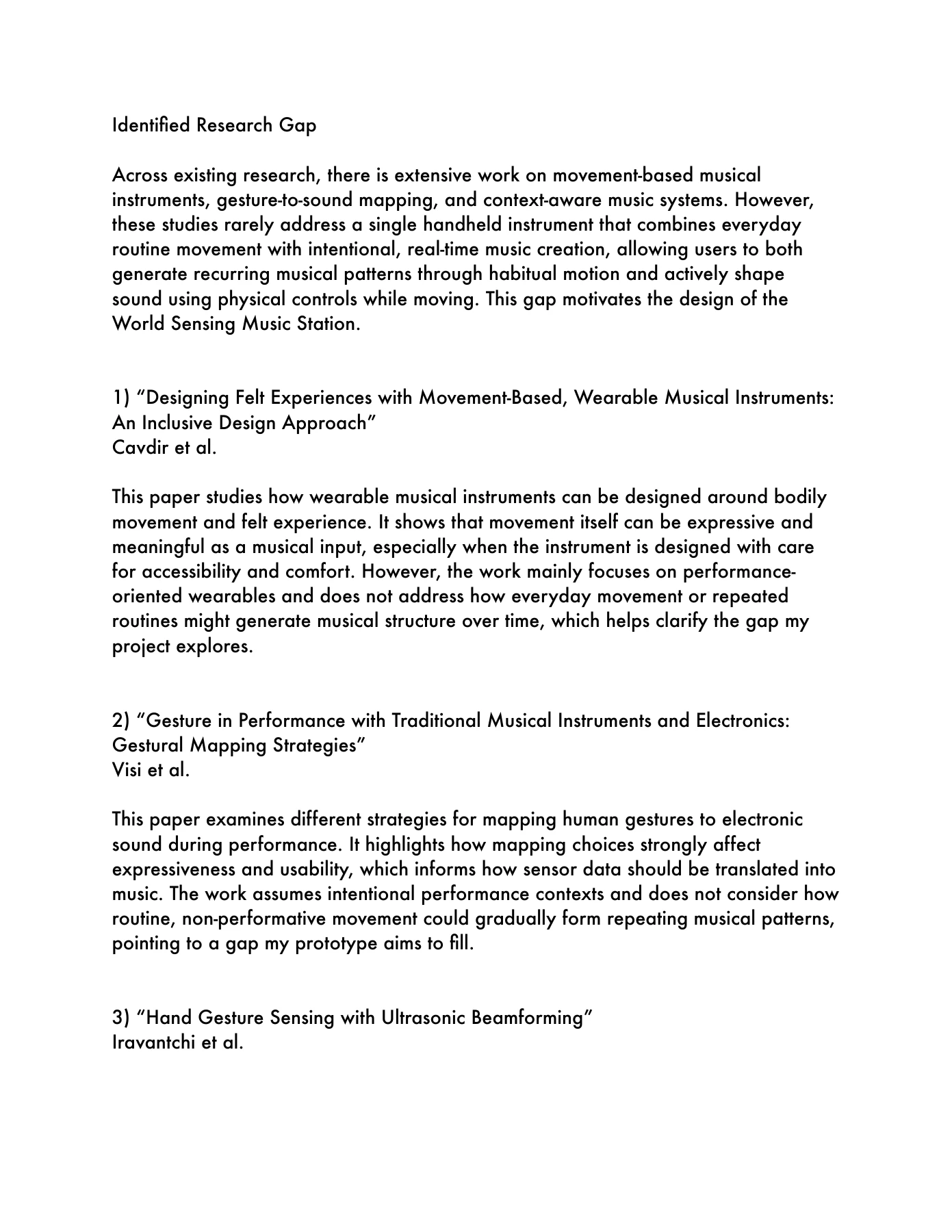
Complete original PDF page 7: Research gap.
Research gapPDF 7 / 13
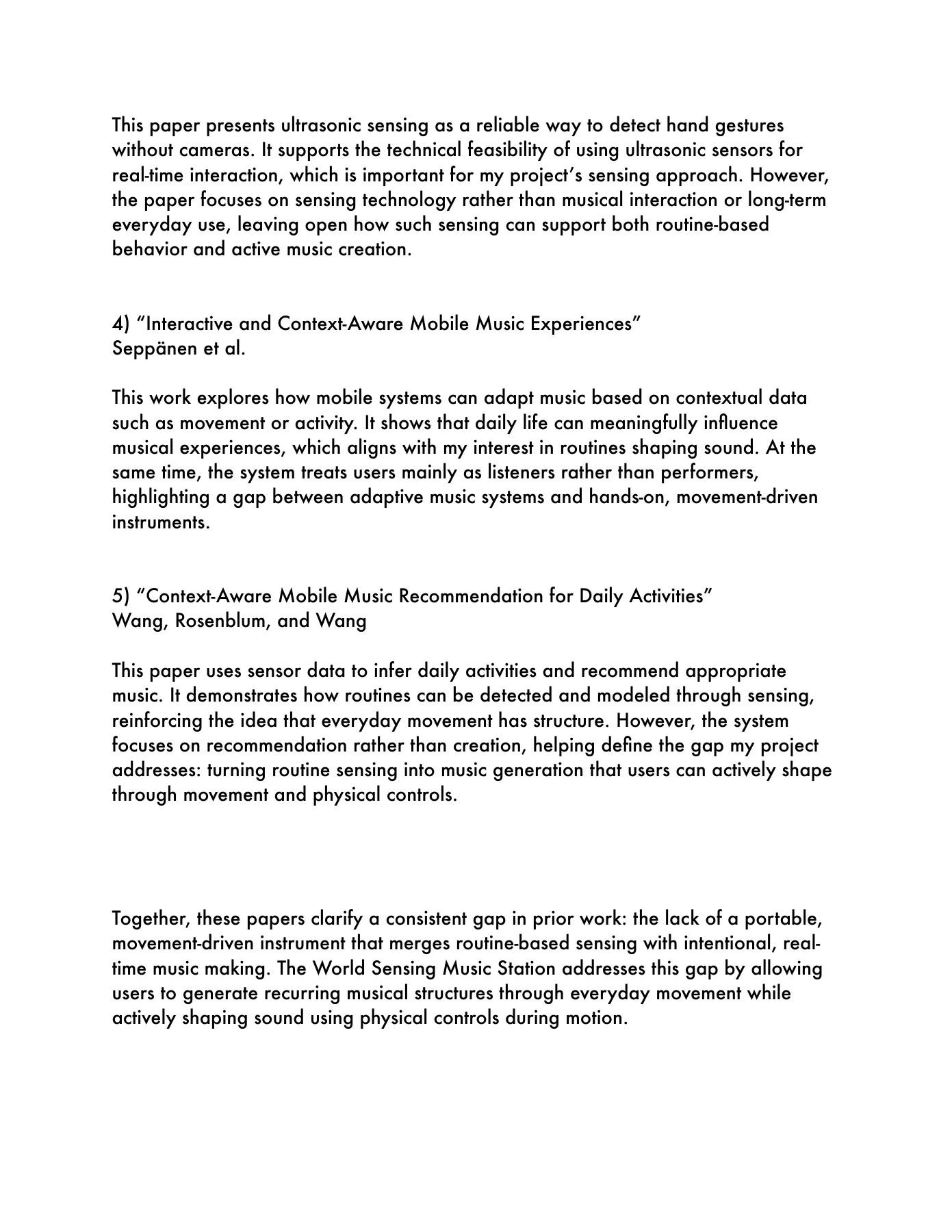
Complete original PDF page 8: Sensing research.
Sensing researchPDF 8 / 13
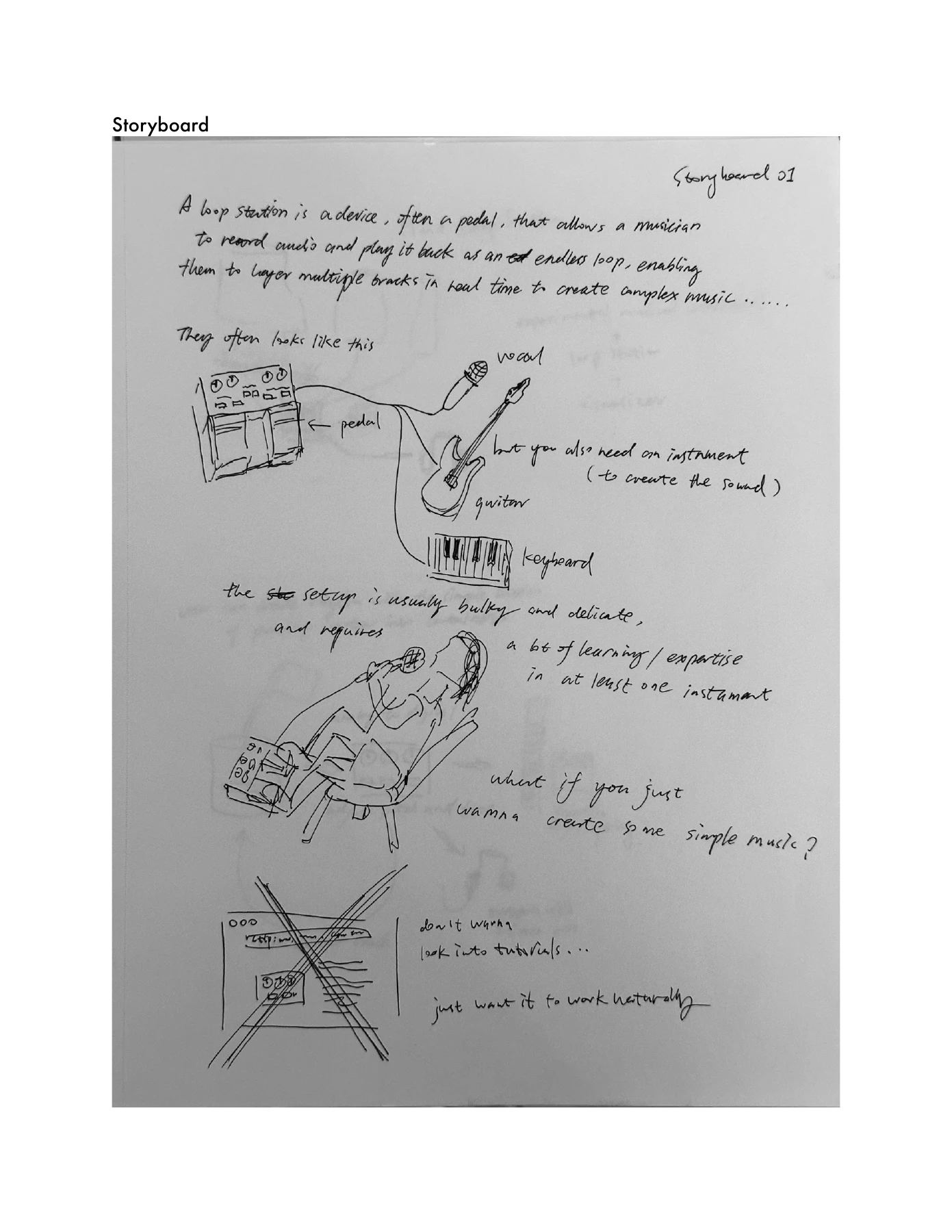
Complete original PDF page 9: Storyboard.
StoryboardPDF 9 / 13
Complete original PDF page 10: Prototype drawing.
Prototype drawingPDF 10 / 13
Complete original PDF page 11: Instrument development.
Instrument developmentPDF 11 / 13
Complete original PDF page 12: Device in use.
Device in usePDF 12 / 13
Complete original PDF page 13: Prototype & demonstration.
Prototype & demonstrationPDF 13 / 13

Pages 1–4 of 13

PROJECT FILES

PDF page 1 / 13

Complete original PDF page 1
Open original PDF